
By popular demand: Sticker Selfie, Capitol Prize is back!
In 2024, hundreds of you sent in photos of yourselves proudly wearing an “I Voted” sticker. You clearly wanted a repeat, so here it is.
On or before Nov. 3, cast your ballot, snap a selfie and send it to me by clicking the red button below. Deadline: Friday, Nov. 6.
Five winners, chosen at random, will each receive a U.S. flag flown over the U.S. Capitol.
Every entry has the same chance, regardless of party, policy view, geography or how you voted. By submitting, you give us permission to share your photo in a future Capital Commentary.
Does your town, city or state have a sticker with real personality? Show it off. If yours stands out, we’ll consider it for our Most Creative Sticker award. Two additional winners will be chosen and receive a flag, as well.
Democracy works best when people show up. Show us you did.
Now to the news…
1. Pulte Equalizes the Grid. Lenders Pick the Higher Score.
Driving the news: FHFA Director Bill Pulte’s recent move to integrate VantageScore® with Fannie and Freddie’s pricing grid is reshaping credit score dynamics in the mortgage industry.
Why it matters: This change allows lenders to select the higher of the two scores, often VantageScore, optimizing pricing strategies and potentially reducing costs.
The momentum:
- Rocket Mortgage is now prioritizing VantageScore 4.0 for eligible loans, offering borrowers an average of $1,600 in savings at closing.
- PennyMac has fully adopted VantageScore across all channels, with expectations to influence smaller lenders as the largest correspondent aggregator.
What they’re saying: “Rocket Mortgage’s study confirms that VantageScore 4.0 opens access to underserved clients, offering them better pricing terms,” according to a company release.
By the numbers: Rocket’s analysis shows an average $1,600 savings at closing.
The case for:
- VantageScore 4.0 includes rent and utility payments, aiding thin-file borrowers in qualifying.
- PennyMac’s CEO supports multiple scoring options to drive innovation and cost reductions.
The case against:
- Critics like former Freddie Mac CEO Don Layton argue that dual scoring increases costs, as lenders must purchase both scores for MBS investors.
- Layton warns of “collateral damage” to risk-based pricing and potential political motivations complicating GSE policies.
- Private Mortgage Insurance Eligibility Requirements (PMIERs) currently mandate more capital on loans underwritten solely with VantageScore credit scores, creating a disconnect between MI premiums and loan level price adjustments.
What’s next: Layton anticipates future revisions to balance multiple score benefits with minimal downsides, ensuring stability in the housing finance market.
2. Fannie Score, Freddie Score. Are More Scores Better?
Pulte says Fannie and Freddie’s internal credit scoring data will now be attached to MBS, credit risk transfer and other securities.
- He cites a “safer and sounder market” and transparency.
- Beginning Oct. 19, Fannie’s MBS disclosures will include Fannie Score, Freddie Score and a pricing-model indicator.
Why it matters: Fannie’s Desktop Underwriter® has considered the Fannie Score since 2000,but investors have never seen it. Fannie says it is not used to price loans.
What they’re saying: The Community Home Lenders of America (CHLA) backed the move in a Sept. 29 letter.
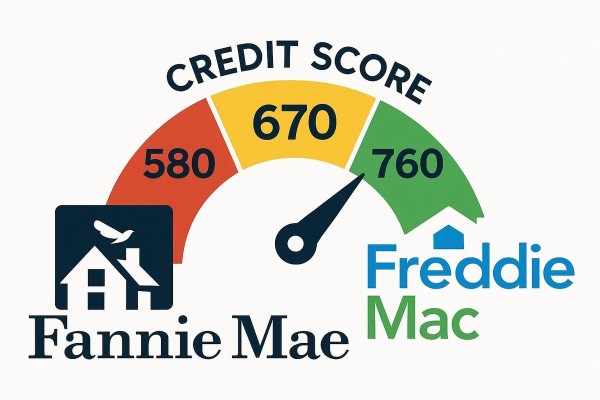
- Investor benefit: CHLA says the added data should help investors assess prepayment speeds and credit performance, and “improve market efficiency.”
- Cost pressure: CHLA says score prices have risen every fall since 2022 and expects another increase for 2027. FICO®’s mortgage price rose from roughly 50 to 60 cents a score in 2018 to $10 in 2026, according to Noozify, and lenders now buy three scores for each borrower (more on that, below).
- Bigger goal: CHLA has urged “up to four” score suppliers since May 2025, with the GSEs’ own algorithms as entrants.
Reality check: Lenders cannot choose Fannie Score or Freddie Score, and FHFA has announced no plans to authorize them.
Between the lines: The Oct. 19 disclosures will give investors data to test GSE scores against FICO and VantageScore.
What’s next: Watch the Oct. 19 disclosures and how investors start using GSE scores in their investment decisions.
3. Two’s Company?
Another policy change may be on hold: reducing the required number of credit-score pulls from three to two.
Industry insiders expected the so-called “tri-merge to bi-merge” policy to be announced by Pulte at the Mortgage Bankers Association convention in Chicago but the Director cancelled his appearance.
Rewind: Bi-merge started under Sandra Thompson during the Biden administration.
- October 2022: FHFA announced a move from three bureau reports to two.
- 2023–24: FHFA opened a comment process, then tied the timeline to the Classic FICO transition.
- Result: The plan stalled with implementation challenges. Pulte reversed it in July 2025, keeping tri-merge. He revived bi-merge in September.
Why it matters: A tri-merge report costs roughly $80 to $100, so fewer pulls means upfront savings for borrowers.
The case for one report (MBA): MBA asked Pulte to let lenders rely on a single report when the first score is 700 or higher.
- MBA says members’ data show narrow variances in tradelines and scores for those borrowers.
- MBA President and CEO Bob Broeksmit told attendees at the association’s annual convention that he’s “increasingly confident that tri-merge won’t be around for long.”

Share your thoughts: We invite you to click here and share your insights on this issue.
Explore Arch MI Insights: Want to dive deeper? Click here to access past issues and listen to previous episodes of the Arch MI PolicyCast podcast.
The case against:
- Redundancy: The bureaus’ trade group, Consumer Data Industry Association, calls tri-merge the “gold standard” for understanding a borrower’s history.
- Gaming: Critics worry lenders will cherry-pick the two most favorable reports. AEI notes a single report makes outcomes more sensitive to whichever bureau is chosen.
- Even Thompson’s data: FHFA found moving from three to two had little discernible effect on scores, but moving to one had a significant impact.
My thought bubble: Individually, these changes may not add much risk to the housing finance system.
But leveling the GSEs’ pricing grid, promoting a credit score that trends higher than FICO Classic while permitting lenders to pick two rather than three scores, will add risk to Fannie and Freddie and, therefore, taxpayers.

About Arch MI’s Capital Commentary
Capital Commentary newsletter reports on the public policy issues shaping the housing industry’s future. Each issue presents insights from a team led by Kirk Willison.
About Arch MI’s PolicyCast
PolicyCast — a video podcast series hosted by Kirk Willison — enables mortgage professionals to keep on top of the issues shaping the future of housing and the new policy initiatives under consideration in Washington, D.C., the state capitals and the financial markets.
Stay Updated
Sign up to receive notifications of new Arch MI PolicyCast videos and Capital Commentary newsletters.